
What Is an Alumina Sagger and How Is It Made?
An alumina sagger is a high-temperature ceramic container used primarily in kiln firing processes to protect sensitive materials from direct flame, ash, and contamination. It serves as a protective box to hold items such as electronic ceramics, battery materials, and phosphors during calcination or sintering.
Sagger vs Setter vs Crucible
While these terms are related, their functions differ:
- Alumina Sagger: A box-like container designed to shield products inside the kiln.
- Alumina Setter: A flat or shaped support plate used to hold ceramic parts upright.
- Alumina Crucible: A small, cup-shaped vessel for melting or heating substances directly.
Raw Materials
Alumina saggars are made mainly from high-purity alumina powder, typically with purity levels of ≥99% Al₂O₃. The high alumina content ensures excellent thermal stability, strength, and chemical resistance at elevated temperatures.
Manufacturing Methods
Common production techniques include:
- Dry Pressing: Alumina powder is compressed under high pressure in a mould to form a dense shape.
- Isostatic Pressing: Powder is uniformly compacted around the item by applying pressure in all directions, resulting in consistent density and fewer defects.
- Slip Casting: A liquid slurry of alumina is poured into a porous mould and allowed to solidify to create complex shapes.
Firing Process
After shaping, alumina saggars undergo firing at 1700–1800 °C. This high-temperature sintering densifies the material, enhances mechanical strength, and improves thermal shock resistance. The precise temperature and duration depend on the alumina purity and the final application requirements.
Key Technical Specifications of Modern Alumina Saggars
Modern alumina saggars come with varying technical specs designed to meet different industrial needs. Here\’s a quick overview:
| Specification | Typical Range / Value |
|---|---|
| Al₂O₃ Purity Levels | 95%, 99%, 99.5%, 99.7% |
| Max. Service Temperature | 1650–1700 °C (continuous use) |
| Bulk Density | 3.5–3.8 g/cm³ |
| Apparent Porosity | 12–18% |
| Thermal Shock Resistance | High, varies by purity and manufacturing method |
| Standard Dimensions | Usually 200–400 mm (length/width/height); customizable |
99% vs 99.7% Alumina Performance Comparison
| Feature | 99% Alumina Sagger | 99.7% Alumina Sagger |
|---|---|---|
| Purity | 99% | 99.7% |
| Thermal Stability | Good | Excellent |
| Service Temperature | Up to 1650 °C | Up to 1700 °C |
| Thermal Shock | Moderate resistance | Higher resistance |
| Contamination Risk | Moderate | Very low |
| Lifespan (cycles) | 30–50 firings | 60–120 firings |
For those working with sensitive materials like lithium battery cathodes or high-purity electronic ceramics, choosing higher purity alumina saggars (99.5% and above) ensures better thermal performance and fewer contaminants.
Need saggars tailored to your kiln size and firing requirements? Modern production allows full customization for dimensions and shapes. For complementary kiln furniture solutions, consider pairing saggars with alumina setter plates to optimize firing stability and load support.
Advantages of Alumina Saggars Over Other Materials
When choosing kiln furniture for high-temperature processes, alumina saggars stand out for several reasons. Here\’s how they compare to other common materials:
Vs Mullite Saggars
- Purity: Alumina saggars offer higher Al₂O₃ content (95–99.7%) compared to mullite (generally ~70% alumina), making them more chemically stable.
- Thermal Shock Resistance: Mullite handles rapid temperature changes well, but high-purity alumina saggars with proper design often match or exceed this.
- Service Life: Alumina saggars usually last longer due to superior mechanical strength and resistance to kiln atmosphere erosion.
- Contamination Risk: Alumina’s higher purity reduces contamination risk, crucial for sensitive materials like battery cathodes.
- Price: Mullite saggars are cheaper but may need more frequent replacement.
- Weight: Mullite saggars tend to be lighter, which can ease handling.
Vs Corundum-Mullite Saggars
- Purity & Stability: Corundum-mullite blends offer intermediate purity. Alumina saggars with ≥99% Al₂O₃ provide better chemical inertness.
- Thermal Shock Resistance: Corundum-mullite blends are good; however, superior densification techniques in alumina saggars improve their thermal shock resistance.
- Service Life & Contamination: Alumina saggars generally have longer life and lower contamination risk.
- Cost & Weight: Corundum-mullite is a budget-friendly alternative but less optimal for ultra-high purity needs.
Vs Silicon Carbide Saggars
- Temperature Resistance: Silicon carbide excels in very high temperatures but may degrade in oxidizing atmospheres, whereas alumina saggars stay stable.
- Thermal Shock: Silicon carbide has excellent thermal shock resistance, often better than alumina.
- Service Life: In oxidizing kiln environments, alumina saggars last longer.
- Contamination: Alumina is more inert chemically, which helps avoid impurities in the fired product.
- Price: Silicon carbide saggars are usually more expensive.
- Weight: Silicon carbide tends to be lighter, aiding kiln load efficiency.
Vs Zirconia Saggars
- Purity: Zirconia offers excellent thermal stability but lower alumina content.
- Thermal Expansion: Zirconia has higher expansion, increasing cracking risk compared to alumina.
- Service Life: Zirconia saggars perform well but are prone to phase changes at high temps; alumina is more stable under steady conditions.
- Contamination Risk: Alumina generally has less risk with sensitive materials.
- Cost: Zirconia is significantly more expensive.
- Weight: Zirconia saggars are heavier than alumina.
Quick Comparison Table
| Feature | Alumina (99%) | Mullite | Corundum-Mullite | Silicon Carbide | Zirconia |
|---|---|---|---|---|---|
| Purity (Al₂O₃) | 95–99.7% | ~70% | ~85–90% | Low | Low |
| Thermal Shock | Good – Excellent | Excellent | Good | Excellent | Moderate |
| Service Life | Long | Moderate | Moderate | Long (in inert atm.) | Moderate |
| Contamination | Very Low | Moderate | Moderate | Low | Low |
| Price | Moderate | Low | Low | High | Very High |
| Weight | Moderate | Low | Moderate | Low | High |
Alumina saggars hit the sweet spot between price, purity, durability, and contamination control, especially where high-temperature stability and chemical inertness are needed. For more on advanced kiln materials, check out our silicon carbide castable.
Main Applications by Industry (2025)
Alumina saggars are essential in several high-tech industries due to their outstanding purity and thermal stability. Here’s where they shine in 2025:
-
Lithium-ion battery materials: Used extensively for firing cathode and anode materials like LFP (Lithium Iron Phosphate), NCM (Nickel Cobalt Manganese), and LCO (Lithium Cobalt Oxide). Their high purity (up to 99.7% Al₂O₃) ensures no contamination during calcination, which is critical for battery performance.
-
MLCC and electronic ceramics: Medium and high-density multi-layer ceramic capacitor materials require clean, stable firing environments. Alumina saggars help maintain consistent quality with low impurity risk.
-
Fluorescent and LED phosphors: For phosphor materials, which are sensitive to contamination, alumina saggars provide a high-purity firing box to preserve luminescent properties.
-
High-purity alumina powder calcination: Alumina saggars serve a double role here—not only as containers but also as kiln furniture essential for producing ultra-pure alumina powder.
-
Rare-earth oxides and advanced ceramics: Their resistance to thermal shock and chemical stability make them ideal for firing rare-earth oxides and next-gen ceramics used in aerospace, defense, and electronics.
We often see real-world case studies showing detailed temperature curves confirming alumina saggars’ reliability in these applications, ensuring consistent results cycle after cycle.
For tailored solutions in ceramic kiln furniture that complement alumina saggars, you may find the cordierite-mullite support plates useful to improve overall kiln stability and performance.
How to Choose the Right Alumina Sagger for Your Process
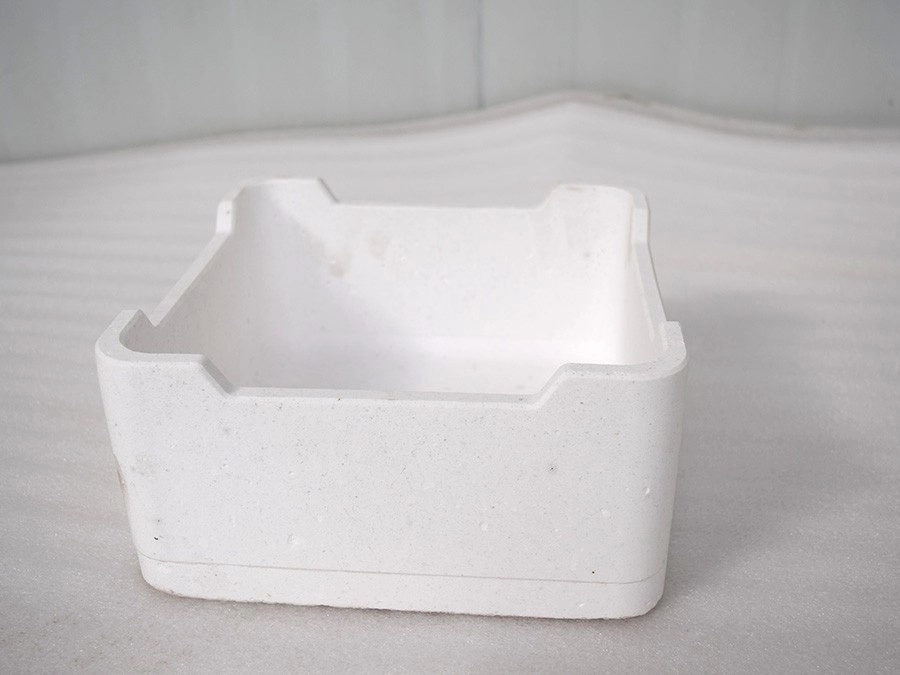
Picking the perfect alumina sagger depends on several key factors tailored to your firing needs. Here’s what to keep in mind:
Purity vs Cost Trade-Off
- Higher purity (99.7%) means less contamination, ideal for sensitive materials like lithium-ion battery cathodes and rare-earth oxides.
- Lower purity (95%–99%) options cost less but carry higher contamination risk and shorter lifespan.
- Balance your budget with required product quality.
Wall Thickness & Load-Bearing
- Thicker walls offer better mechanical strength and durability for heavy loads.
- Thinner walls reduce weight and allow faster heat transfer but can crack under stress.
- Match wall thickness to your product’s weight and kiln conditions.
Thermal Shock Resistance for Fast Firing
- Fast cycles mean rapid temperature changes; choose sagger materials with strong thermal shock resistance.
- Higher-purity, more dense saggars handle sudden temperature shifts better.
Contamination-Sensitive Materials
- When firing highly sensitive products like batteries or electronic ceramics, opt for 99.7%+ Al₂O₃ saggars to minimize contamination.
- Contamination from lower-grade saggars can ruin product specs and yield.
Decision Flowchart (Idea)
| Step | Question | Recommendation |
|---|---|---|
| 1. What’s the material purity? | High (≥99.5%) or standard? | High purity for sensitive materials |
| 2. Load weight | Heavy (>100 kg) or light? | Thicker walls for heavy loads |
| 3. Firing speed | Fast or slow? | Thermal shock resistant material |
| 4. Sensitivity to contamination | High or low? | Use 99.7% alumina for high sensitivity |
Choosing wisely saves money, improves yield, and extends sagger life. For the best fit, connect with a trusted custom alumina sagger manufacturer experienced in your industry.
For related kiln furniture options, check out our alumina ceramic bearing solutions and alumina bubble bricks designed to enhance firing efficiency.
Service Life Expectancy and Cost-Saving Tips
Alumina saggars typically last between 30 to 120 firing cycles, but this varies widely depending on the firing temperature, load, and handling. Higher purity saggars (like 99.7% alumina) often have a longer service life due to better thermal shock resistance and mechanical strength.
Factors That Reduce Lifespan
- Rapid temperature changes causing thermal shock
- Overloading beyond the sagger’s specified capacity
- Poor kiln atmosphere leading to chemical corrosion
- Improper stacking or jarring during loading/unloading
- Using the wrong sagger type/material for your firing needs
Proper Handling and Kiln Maintenance Tips
- Preheat kiln slowly to avoid thermal stress.
- Load evenly to prevent uneven deformation.
- Use appropriate setter plates and supports, like those in our alumina ceramic sheet range, to spread weight uniformly.
- Clean saggars carefully after each cycle to remove residue.
- Avoid direct impact and sudden movements when handling.
ROI Calculation Example
Investing in high-purity alumina saggars can seem costly upfront, but longer lifespan and fewer replacements lower overall expenses. For example:
| Cost per Sagger | Average Cycles | Cost per Cycle |
|---|---|---|
| $500 | 50 | $10 |
| $750 (higher purity) | 120 | $6.25 |
This means better saggars save money over time by reducing downtime, breakage, and contamination risk.
Taking care of your saggars properly keeps your firing process efficient and your costs down—an easy win for any operation.
Gotrays Alumina Saggars – Why Industry Leaders Choose Us
Gotrays alumina saggars stand out in the market thanks to their superior quality and tailored solutions. Here’s why top manufacturers prefer Gotrays for their high-temperature needs:
| Feature | Details |
|---|---|
| Purity | 99.5% to 99.7% Al₂O₃ (validated by third-party test reports) |
| Customization | Fully customizable: size, shape, lid design, holes |
| Sampling Speed | Samples ready in 7–12 days |
| Lead Time | Fast production turnaround: 15–25 days |
| Thermal Stability | Minimal thermal deformation technology ensures longer service life |
| Global Reach | Proven export experience to Europe, Japan, Korea, and the USA |
Our ability to deliver precisely what your process demands—whether it’s a custom alumina sagger with specific dimensions or enhanced thermal shock resistance—makes us a trusted partner worldwide. Get reliable, low-deformation kiln furniture alumina that helps your operation run smoothly and efficiently.
For more information about manufacturing advanced ceramic components, check out our sillimanite powder to complement your high-temperature processes.
Latest Industry Trends (2024–2025)
The alumina sagger market is evolving quickly, especially with demands from battery and advanced ceramics industries. Here are the key trends shaping 2024–2025:
-
Shift to Higher Purity: There\’s a clear move from 99% alumina to 99.7% purity, especially for lithium-ion battery materials like LFP, NCM, and LCO. Higher purity means less contamination risk and better product quality.
-
Larger Saggar Sizes: To increase efficiency, more manufacturers are opting for larger saggars capable of handling loads between 150–300 kg. Bigger capacity helps reduce firing cycles and improve throughput.
-
Thinner, Stronger Walls: Advances in manufacturing let us produce saggars with thinner walls without sacrificing strength or thermal shock resistance. This reduces weight and saves kiln space while maintaining durability.
-
Sustainability Focus: Recycling and reusing alumina saggars is gaining traction to cut costs and reduce waste. Many plants now adopt practices to reclaim saggars after their service life or use eco-friendly production techniques.
These trends reflect the industry\’s push toward higher performance, cost efficiency, and environmental responsibility. For cutting-edge alumina sagger solutions, companies often turn to custom alumina sagger manufacturers who can meet evolving specs.
For complementary kiln furniture and refractory solutions tailored to high-temp processing, products like mullite bricks are increasingly integrated to optimize firing setups.
Frequently Asked Questions
What temperature can alumina saggars withstand?
Alumina saggars typically withstand continuous service temperatures between 1650–1700 °C. Short-term spikes up to 1800 °C are possible, but prolonged exposure above 1700 °C may reduce their lifespan.
Difference between alumina sagger and alumina crucible?
| Feature | Alumina Sagger | Alumina Crucible |
|---|---|---|
| Purpose | Protects kiln loads during firing | Melts or holds molten materials |
| Structure | Box-shaped with lid | Cup or bowl-shaped |
| Usage | Used as kiln furniture for batch firing | Direct contact with melts |
| Thermal shock resistance | High | Generally lower |
Can you make saggars with 99.99% purity?
Technically yes, but producing 99.99% purity saggars is very costly and challenging. Most industrial applications use 99% to 99.7% alumina saggars, balancing performance and cost.
Minimum order quantity and sample policy?
- Minimum order quantity (MOQ): Usually starts from 10 pcs, but varies by size and customization.
- Sample policy: Many manufacturers, including Gotrays, offer samples within 7–12 days for testing purposes.
How to clean and reuse alumina saggars?
- Remove residual powders or ceramics gently using a soft brush.
- Avoid harsh chemicals; water and mild detergents work well, then dry thoroughly.
- Inspect for cracks before reuse; damaged saggars reduce firing safety and lifespan.
Additional Real User Questions
- How does wall thickness affect saggar durability?
- What causes saggar contamination and how to minimize it?
- Can saggars be customized for specific battery material firing?
- What’s the best firing schedule to extend saggar life?
- How to reduce thermal shock during fast firing cycles?
- Are there eco-friendly disposal options for spent saggars?
For more robust kiln furniture solutions, consider pairing alumina saggars with other high-performance items like magnesiacarbon bricks or sillimanite ceramic rods.
 English
  Korean
  Arabic