
What Is an Alumina Ceramic Tube? A Quick Introduction
An alumina ceramic tube is a hollow cylindrical component made primarily of aluminum oxide (Al₂O₃), with purity levels ranging from 95% to 99.9%. The high-purity alumina content ensures excellent mechanical, thermal, and chemical properties, making these tubes ideal for demanding industrial applications.
Alumina (Al₂O₃) is the most widely used advanced ceramic due to its unique combination of properties:
- High thermal stability: Suitable for continuous use at temperatures from 1500°C up to 1800°C depending on purity.
- Mechanical strength: Hardness close to Mohs 9 and excellent wear resistance.
- Electrical insulation: Resistivity often exceeds 10¹⁴ Ω·cm, enabling use as reliable insulators.
- Chemical inertness: Resistant to acids, alkalis, and molten metals.
- Low thermal expansion: Minimizes thermal shock and dimensional changes in harsh environments.
This blend of thermal, mechanical, and chemical properties explains why alumina ceramic tubes are preferred in high-temperature and high-wear applications across industries worldwide.
Key Properties of High-Purity Alumina Ceramic Tubes
High-purity alumina ceramic tubes stand out for their impressive range of properties that make them ideal for demanding industrial applications. Depending on the purity level—ranging from 95% up to 99.9% Al₂O₃—these tubes can operate at extremely high temperatures between 1500°C and 1800°C, making them suitable for most high-temperature environments.
They offer excellent thermal shock resistance, which means they can withstand rapid temperature changes without cracking or degrading. This is crucial for applications like thermocouple protection tubes in furnaces, where temperature fluctuations are frequent.
In terms of mechanical strength, alumina tubes boast a Mohs hardness of 9, making them exceptionally durable and resistant to wear. Their electrical insulation capabilities are also outstanding, with resistivity exceeding 10¹⁴ Ω·cm, ensuring reliable performance as electrical insulators in harsh environments.
Alumina tubes resist chemical corrosion from acids, alkalis, and even molten metals, extending their service life in aggressive chemical settings. Additionally, they have low thermal expansion and minimal dielectric loss, which helps maintain structural stability and electrical efficiency under thermal stress.
These combined characteristics make high-purity alumina tubes a trusted choice across industries requiring reliable, long-lasting ceramic components.
For those interested in complementary high-temperature materials, you might also explore our range of phosphate bonded high alumina bricks, which share many of these robust properties.
Standard Specifications and Custom Options (2025)
Gotrays offers alumina ceramic tubes in a variety of standard and custom options to meet diverse industrial needs. Here’s a quick overview of our typical specs and customization capabilities:
| Specification | Details |
|---|---|
| Purity Grades | 95%, 99%, 99.5%, 99.7%, 99.9% Al₂O₃ |
| Outer Diameter Range | 0.5 mm to 150 mm |
| Wall Thickness | From 0.1 mm up (depends on diameter & design) |
| Length Range | Up to 1000 mm+ (customizable) |
| Tube Types | One-end closed, two-end open, multi-bore tubes |
| Tolerances | ±0.02 mm to ±0.1 mm (dependent on size) |
| Surface Finish | As-fired (matte), polished (smooth, shiny) |
Purity Grades Explained
- 95% alumina is ideal for general uses where cost is a concern.
- Higher purities (99.5% to 99.9%) offer better thermal, mechanical, and electrical properties for demanding applications.
Tube Styles
- One-end closed tubes are common for thermocouple protection and sensors.
- Two-end open tubes fit applications needing airflow or insertion both sides.
- Multi-bore tubes serve specialized equipment requiring parallel channels.
Custom Sizes & Finishes
We can tailor dimensions, bore counts, and finishes to fit your project perfectly. For quick reference, check out our Gotrays standard size chart available upon request.
Our precision extrusion and in-house CIP (Cold Isostatic Pressing) ensure tight tolerances and consistent quality. For more information on compatible furnace components, see our related quartz ceramic kiln furniture which complements alumina tube applications.
Whether you need a small batch prototype or volume production, Gotrays provides flexible solutions with fast turnaround times.
Main Applications by Industry
Alumina ceramic tubes are trusted across many industries because of their excellent durability and resistance to extreme conditions. Here are the key applications:
- High-temperature furnaces & kilns: Commonly used as thermocouple protection tubes, alumina tubes shield temperature sensors from harsh furnace environments while maintaining accuracy.
- Semiconductor and vacuum equipment: Their electrical insulation and chemical stability make alumina tubes ideal for vacuum chambers and semiconductor processing tools.
- Laboratory analytical instruments: Used for sample containment and protection in high-heat or corrosive testing setups.
- Aerospace and defense: Alumina tubes serve as ignition tubes or electrical insulators that withstand extreme temperatures and mechanical stress.
- Metal melting and casting: Tubes like lances or stalks help direct molten metal flows or gases during refining and casting operations.
- LED sapphire growth furnaces: High-purity alumina tubes provide the perfect environment for sapphire crystal growth, critical for LED production.
- Medical and dental equipment: Thanks to biocompatibility and chemical resistance, alumina tubes are used in various medical devices and dental tools.
Whether you need tubes for protection, insulation, or chemical resistance, the versatility of alumina ceramic tubes supports reliable performance across these demanding applications. For custom alumina tubes tailored to specific industry needs, visit our product range for options and specifications.
Alumina vs Quartz vs Zirconia vs Mullite Tubes – Comparison Table
Here\’s a quick side-by-side look at how alumina ceramic tubes stack up against quartz, zirconia, and mullite tubes. This helps you pick the right tube based on your needs like temperature tolerance, strength, cost, and more.
| Property | Alumina Ceramic Tube | Quartz Tube | Zirconia Tube | Mullite Tube |
|---|---|---|---|---|
| Max Operating Temp | 1500°C – 1800°C (depending on purity) | ~1100°C | 2200°C | 1600°C |
| Mechanical Strength | Very high (Mohs hardness ~9) | Low | Very high | Moderate |
| Thermal Shock Resistance | Good | Poor | Excellent | Good |
| Electrical Insulation | Excellent (>10¹⁴ Ω·cm) | Good | Good | Moderate |
| Chemical Resistance | Resistant to acids, alkalis, molten metals | Good | Excellent | Good |
| Transparency | Opaque | Transparent | Opaque | Opaque |
| Cost | Moderate to high | Low | High | Low to moderate |
| Common Uses | Furnace tubes, thermocouple protection, insulation | Lighting, optics | Oxygen sensors, fuel cells | Kiln linings, furnace parts |
- Alumina tubes balance high temperature resistance and durability at a moderate cost, ideal for harsh industrial uses.
- Quartz tubes excel where transparency and lower cost are crucial but can\’t handle ultra-high heat or rough handling.
- Zirconia tubes stand out for extreme temperatures and strength but come at a premium price.
- Mullite tubes offer a budget-friendly option with decent high-temp tolerance but lower strength than alumina or zirconia.
Choosing between these depends on what your project prioritizes: max temperature, mechanical strength, or cost-efficiency.
For example, alumina ceramic tubes often complement advanced furnace parts like the corundum mullite bricks that handle extreme heat in industrial settings.
How to Choose the Right Alumina Ceramic Tube
Picking the right alumina ceramic tube doesn’t have to be complicated. Follow this quick guide to make sure you get the best fit for your application.
Step-by-Step Selection Checklist
| Step | What to Consider | Why It Matters |
|---|---|---|
| 1. Max Operating Temperature | What’s the highest temperature your tube needs to handle? | Choose purity that matches the max temp (up to 1800°C for 99.9% alumina) |
| 2. Working Atmosphere | Is your tube exposed to air, vacuum, corrosive gases, or molten metal? | High-purity alumina offers better chemical resistance across harsh environments |
| 3. Thermal Shock Resistance | Will the tube face rapid temperature changes? | Higher purity tubes usually resist thermal shock better |
| 4. Size Limits | What diameter and length do you need? | Make sure your specs fit standard or custom tube sizes (0.5 mm to 150 mm outer diameter) |
| 5. Mechanical Strength | Will the tube be under mechanical stress or vibration? | High hardness (Mohs 9) alumina withstands rough use |
| 6. Purity vs Cost | What’s your budget and purity requirement? | 99% alumina works for many uses, but upgrading to 99.9% gives better durability and thermal performance |
When to Upgrade From 99% to 99.9% Alumina
- High temperature use: Above 1600°C, choose 99.9% alumina for better stability.
- Severe chemical exposure: 99.9% purity means fewer impurities, boosting corrosion resistance.
- Critical thermal shock cycles: If your process involves frequent temperature swings, higher purity resists cracking.
- Precision instruments or aerospace: Stringent specs often require the highest purity for reliability.
Choosing correctly ensures longer service life, fewer failures, and better process results.
For custom alumina tubes tailored to your exact needs, check out our options including wall thickness, length, and end closures. You can also explore related products like our alumina ceramic nozzles for complementary high-temperature components.
Pricing Factors in 2025 (What Actually Drives Cost)
When it comes to pricing alumina ceramic tubes in 2025, several key factors play a role in the final cost:
- Purity Impact: Higher purity levels like 99.9% alumina ceramic tubes demand more refined raw materials and processes, pushing the price up compared to standard 95% or 99% grades.
- Size and Tolerance Requirements: Larger outer diameters or extra-thin walls require more material and precise manufacturing, while tight dimensional tolerances and polished surfaces increase complexity and cost.
- Quantity vs Prototyping: Bulk orders benefit from economies of scale, lowering the unit price, whereas prototype or small batch runs usually cost more due to setup and testing overhead.
- One-End Closed vs Open Both Ends: Tubes with one end closed involve additional processing steps, making them pricier than standard two-end open tubes.
While exact pricing varies by supplier and order specifics, expect costs to reflect these variables. If you\’re interested in detailed alumina tube specifications or customizing options that affect pricing, exploring the alumina ceramic bushing collection might offer useful insights.
Quality Standards & Certifications You Should Demand
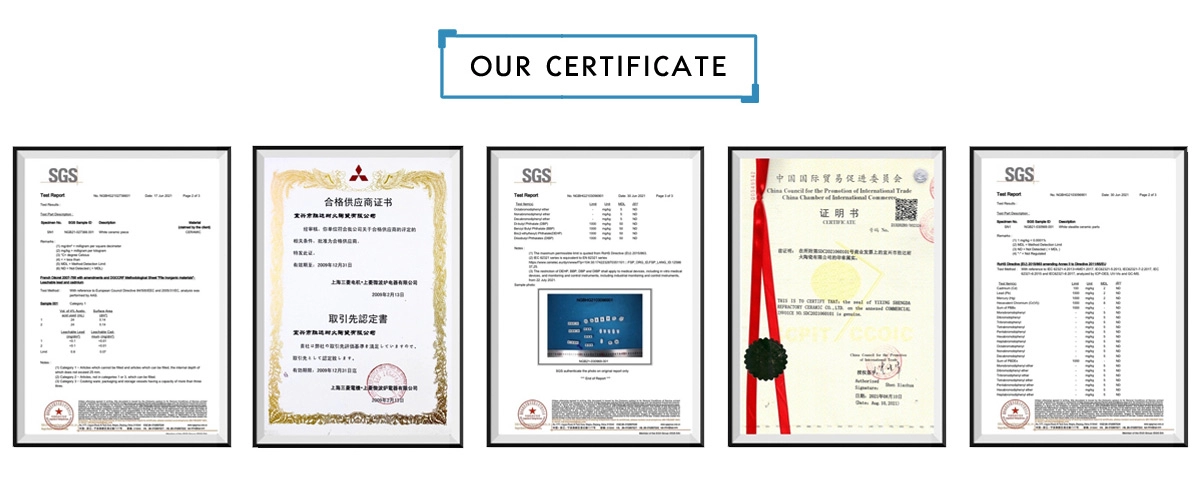
When selecting alumina ceramic tubes, it’s essential to check for strict quality standards and certifications to ensure reliability and safety. Look for products that comply with ISO 9001 — the international standard for quality management systems. This means the manufacturing process is consistently monitored and improved.
Additionally, certifications like RoHS (Restriction of Hazardous Substances) and REACH (Registration, Evaluation, Authorisation and Restriction of Chemicals) confirm that the alumina tubes meet environmental and health safety requirements, which is especially important in sensitive industries such as medical or semiconductor manufacturing.
Always ask for Material Test Reports (MTR) and Certificates of Conformity. These documents detail the exact chemical composition, purity grade (like 99.9% alumina ceramic tube), and physical properties of the batch, ensuring traceability and that the material matches your specifications.
Relying on fully certified alumina tubes protects your process from unexpected failures and guarantees performance under demanding conditions. For complementary materials in high-temperature environments, you might also consider components like this pyrolytic boron nitride (PBN) crucible, which meets similar rigorous standards.
Gotrays Alumina Ceramic Tubes – Why Engineers Choose Us
For over 20 years, Gotrays has specialized in producing high-purity alumina ceramic tubes, ranging from 99% to 99.9% Al₂O₃. Our expertise makes us a reliable partner for industries needing top-quality alumina ceramic tubes.
What Sets Gotrays Apart
| Feature | Benefit |
|---|---|
| In-house CIP & extrusion | Tight control over tube quality and consistency |
| High-temperature sintering | Superior mechanical strength and purity |
| Fast prototyping (7–12 days) | Quick turnaround for custom alumina tubes |
| Low MOQ | Ideal for small projects and prototyping |
| Free samples | Evaluate material before committing |
| Global shipping & support | Reliable delivery with expert technical help |
We focus on providing precision-produced alumina tubes designed to meet your exact specifications. Gotrays’ process ensures high-purity refractory tubes that excel in thermal resistance, electrical insulation, and chemical stability.
Looking for customized alumina ceramic tubes? We can tailor outer diameters, wall thickness, and tube types—including one-end closed, two-end open, or multi-bore configurations—according to your needs.
For related furnace and high-temp applications, check out our alumina bubble brick, designed to complement alumina tubes in thermal environments with enhanced durability.
FAQ – Most Asked Questions About Alumina Ceramic Tubes
What is the highest temperature an alumina tube can withstand?
High-purity alumina ceramic tubes can typically operate at temperatures between 1500°C and 1800°C, depending on the purity level. Tubes with 99.9% alumina usually handle the upper end of this range, making them ideal for high-temperature furnace and kiln applications.
Can alumina tubes survive thermal shock?
Yes, alumina ceramic tubes offer excellent thermal shock resistance compared to many other ceramic materials. However, sudden, extreme temperature changes should still be avoided to prevent cracking or failure during use.
Are one-end-closed tubes available off-the-shelf?
Many manufacturers, including Gotrays, provide one-end closed alumina tubes as standard options. These are commonly used for thermocouple protection and certain high-temperature furnace needs, so ready-made sizes are often available to shorten lead times.
How long is typical lead time for custom sizes?
Custom alumina ceramic tubes usually require 7 to 12 days for prototyping and manufacturing, depending on complexity, purity, and size. Faster delivery is possible for standard sizes or repeat orders.
Do you provide drawings or 3D models?
Yes, to ensure accurate fit and performance, most professional suppliers offer technical drawings and 3D CAD models upon request. This helps with seamless integration into your projects and equipment design.
For more detailed technical solutions and custom options, you can explore our custom alumina tubes page.
 English
  Korean
  Arabic